Is Monsoon a Good Time to Visit India? Pros, Cons & Best Places to Go
India’s monsoon season, which typically runs from June to September, divides travelers into two camps: those who avoid it entirely and those who plan their trip around it. Both have a point. Monsoon in India isn’t one uniform experience; it’s a season that transforms landscapes, drives down prices, and clears out the crowds, but it also brings heavy rain, humidity, and travel disruptions depending on where you go.
So, is it a good time to visit? Here’s a balanced look before you book your flights and apply for your tourist visa to India.
When Is Monsoon in India?
India’s monsoon arrives in stages rather than all at once:
- Kerala & the southwest coast: Onset around June 1, the traditional start of the Indian monsoon
- Central & Western India (Mumbai, Goa, Maharashtra): Mid-to-late June
- North India (Delhi, Agra, Jaipur): Late June to early July, with lighter rainfall than the south
- Northeast India (Meghalaya, Assam, Sikkim): Among the wettest regions in the country, monsoon is active from June through September
- Rain-shadow regions (Ladakh, Spiti Valley): Barely affected, these areas stay dry through the season
Rainfall peaks in July and August, and the season generally winds down by late September, though parts of South India can see rain into October.
Pros of Visiting India During Monsoon
-
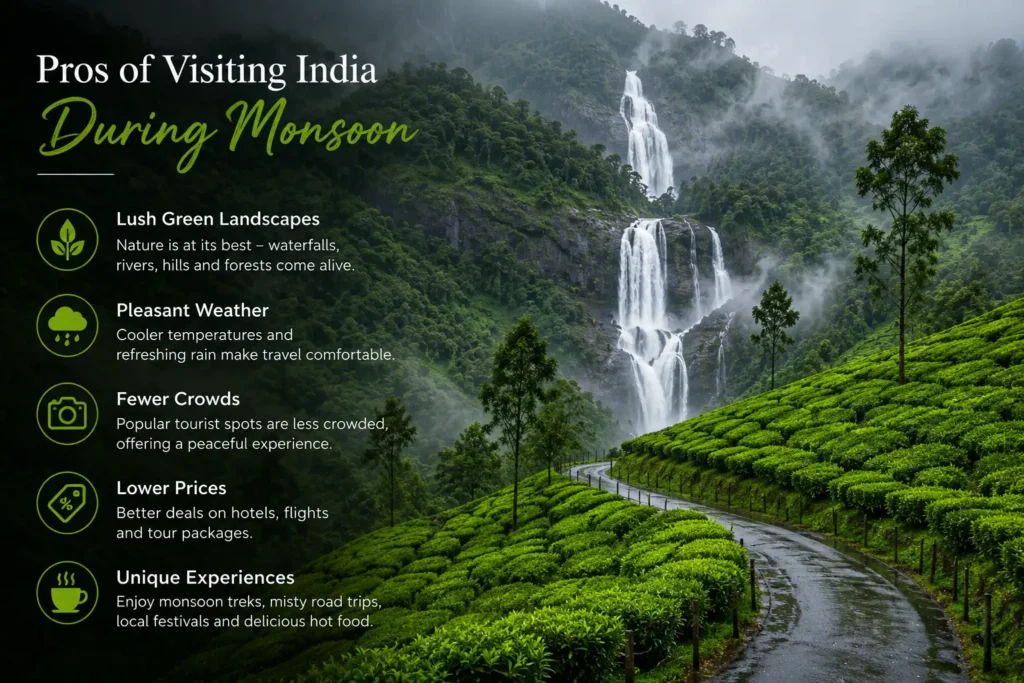
The landscapes come alive
Monsoon is when India looks its greenest. Hill stations, tea plantations, and the Western Ghats turn a vivid emerald that simply doesn’t exist the rest of the year. Kerala’s backwaters, Coorg’s coffee estates, and Meghalaya’s waterfalls are dramatically more impressive during the rains.
-
Fewer tourists, more authentic experiences
Monsoon is the off-peak season for international tourism. That means shorter queues at monuments, more availability at popular homestays, and a less commercialized feel in places that are usually packed with tour groups.
-
Lower prices across the board
Flights, hotels, and tour packages typically drop in price during monsoon months. If you’re flexible with your itinerary, this is one of the most budget-friendly windows to travel in India.
-
Ayurveda season
Kerala, in particular, markets monsoon as the ideal time for Ayurvedic treatments, the humidity is believed to open pores and improve the absorption of oils and herbal treatments. Many wellness retreats specifically time their most intensive programs around this season.
Cons of Monsoon Travel
-
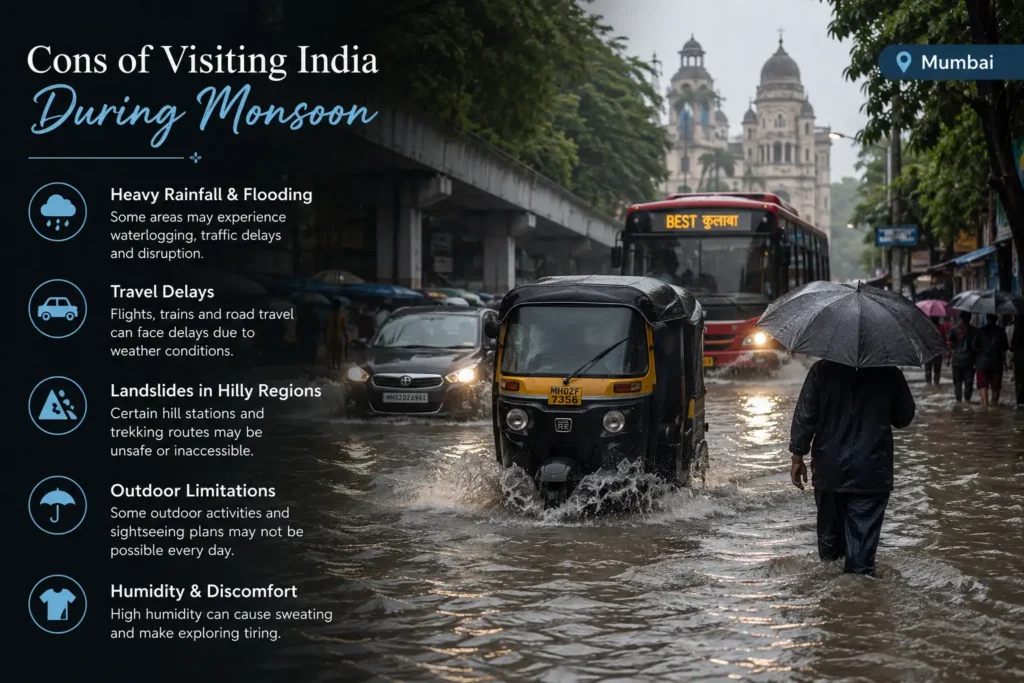
Heavy rainfall and flooding risk
Parts of India, especially Mumbai, coastal Karnataka, and low-lying areas of Assam and Bihar, can experience serious flooding. Road and rail travel can be disrupted, and outdoor sightseeing plans may get cancelled at short notice.
-
Humidity
Even when it isn’t actively raining, humidity levels climb significantly across most of the country, making city sightseeing physically draining.
-
Trekking and outdoor activities are limited
Popular trekking regions in the Himalayas (outside the rain-shadow areas) often close trails during the monsoon due to landslide risk.
-
Wildlife parks and safaris close
Most national parks in India, including Ranthambore, Kanha, and Corbett, shut down from around June/July to October for the breeding season. If wildlife safaris are on your list, the monsoon isn’t the season for it.
Best Places to Visit During Monsoon
- Kerala, backwaters, Ayurveda retreats, and monsoon-fresh greenery
- Coorg & the Western Ghats, waterfalls in full flow, coffee estates at their most vivid
- Meghalaya, living root bridges and some of the wettest, most dramatic scenery in the world
- Goa (post-July), quieter beaches and a slower pace once the heaviest rains ease
- Ladakh & Spiti Valley, rain-shadow regions with clear skies, ideal for July–August travel
- Darjeeling, misty tea gardens, cooler temperatures, and thinner crowds
Destination Comparison Table
| Destination | Monsoon Intensity | Best For | Travel Difficulty |
|---|---|---|---|
| Kerala | High | Backwaters, Ayurveda | Moderate, plan around rain |
| Goa | Moderate-High | Quiet beaches (post-July) | Moderate |
| Coorg / Western Ghats | High | Waterfalls, greenery | Moderate |
| Meghalaya | Very High | Waterfalls, dramatic landscapes | Higher, road disruptions common |
| Ladakh | Very Low | Clear skies, mountain scenery | Easy, peak season |
| Spiti Valley | Very Low | High-altitude desert scenery | Easy, peak season |
| Delhi / Agra / Jaipur | Low-Moderate | Monuments, city sightseeing | Manageable |
Monsoon Travel Tips
- Pack smart: A quick-dry rain jacket works better than an umbrella in windy hill regions; waterproof bags for electronics are essential.
- Build in buffer days: Don’t schedule tight connections between cities, trains and flights face more delays during heavy rain.
- Check regional forecasts, not just national ones: India’s monsoon varies so much by region that a single weather app reading for “India” is close to meaningless.
- Avoid flood-prone low-lying areas during peak rainfall (July): Especially Mumbai, coastal Karnataka, and parts of Assam/Bihar.
- Choose accommodation with good drainage/backup power: Boutique hotels in smaller monsoon-heavy towns can lose power during storms.
- Confirm your travel documents early: Monsoon flight and hotel deals move fast, so it helps to have your visa sorted before you lock in dates.
Is It Safe to Travel to India during the monsoon?
Yes, with sensible precautions. Monsoon travel in India is common and generally safe if you build flexibility into your itinerary, avoid known flood-prone areas during peak rainfall, and keep an eye on regional weather advisories, especially in the Himalayas and Northeast. Delays to flights and trains are more likely than outright danger, the main adjustment is pace, not risk.
Visa Information
Once you’ve settled on your itinerary, the next step is sorting your travel documents. India’s e-Tourist visa makes this simple: apply online, and you’ll have your approval in your inbox without a trip to the embassy.
If your travel dates shift unexpectedly, a common scenario when people decide to chase monsoon deals at short notice, an India visa emergency service can process urgent applications in as little as 48–72 hours, so a late booking doesn’t mean losing your trip.
Conclusion
The monsoon is a good time to visit India if you choose your destinations carefully. Head to the Western Ghats or Kerala for a lush, green, budget-friendly trip, or go to Ladakh if you want clear skies and want to skip the rain altogether. What doesn’t work well is trying to do a pan-India tour during the monsoon without adjusting your route.
FAQs
Is monsoon a bad time to visit India?
Not universally, it depends on the region. Kerala, Goa, and the Western Ghats are genuinely beautiful in monsoon, while flood-prone cities like Mumbai are harder to enjoy during peak rainfall.
Which part of India has no monsoon rain?
Ladakh and Spiti Valley sit in the Himalayan rain shadow and see very little rainfall, making them ideal monsoon-season destinations.
When does the monsoon start and end in India?
It begins in Kerala around June 1 and gradually covers the country through July, with rainfall peaking in July–August and easing by late September.
Do Indian national parks stay open during the monsoon?
Most major parks, including Ranthambore and Kanha, close from roughly June/July through September/October for the breeding season.
Is it cheaper to travel to India in the monsoon?
Yes, flights, hotels, and tour packages are typically at their lowest prices of the year during monsoon months due to reduced tourist demand.
Can I get an Indian visa quickly if I decide to travel during the monsoon at short notice?
Yes, India’s emergency eVisa option is designed for exactly this, with approval typically issued within 48–72 hours.
Is Kerala good to visit during the monsoon?
Yes, particularly for Ayurveda tourism, monsoon humidity is considered ideal for traditional treatments, and the backwaters and hills are at their greenest.